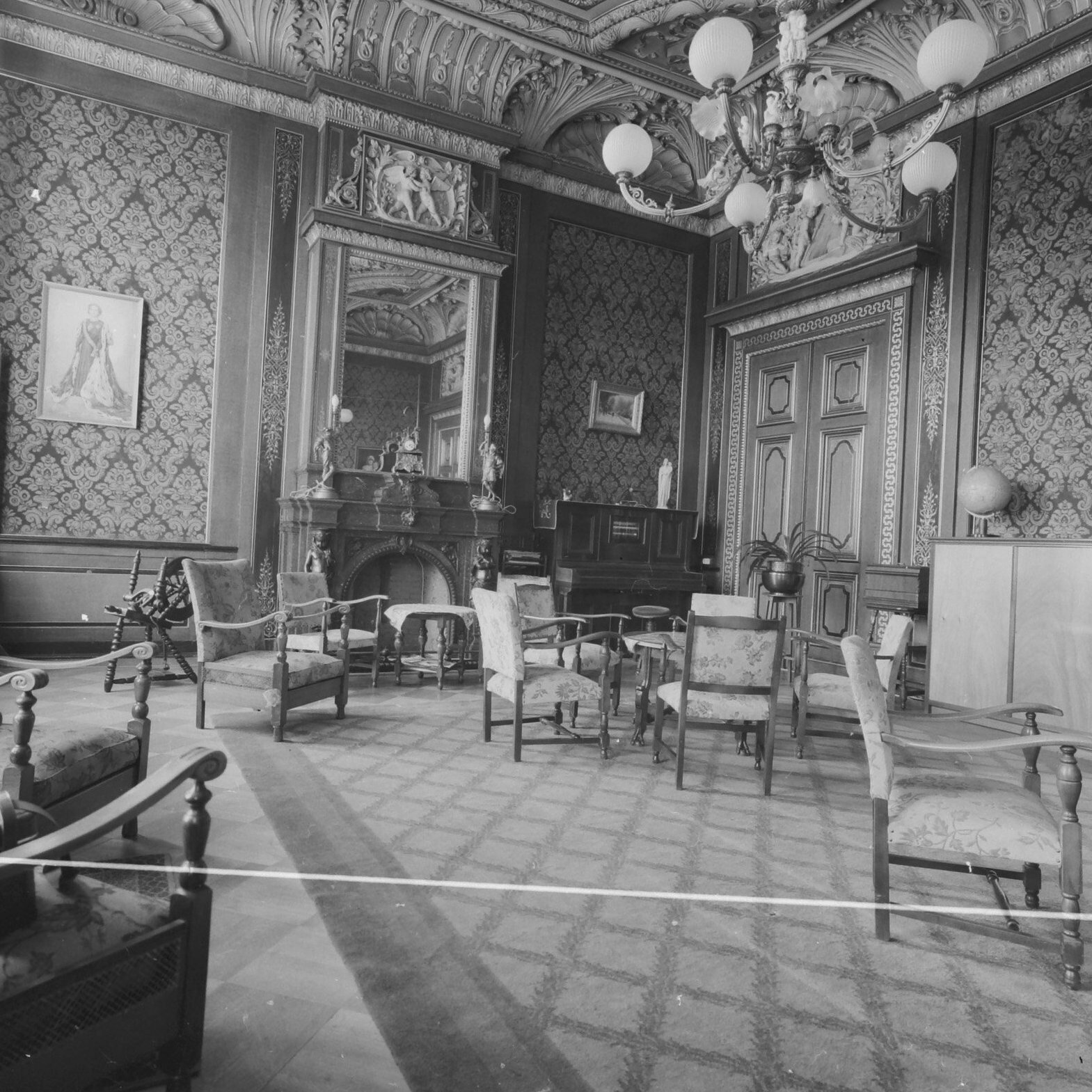
Huidig gebruik:
wonen & delen
Het Plantage Paleis is ons thuis, maar ook zoveel meer. Sinds halverwege 2024 wonen wij hier, een Amsterdamse familie met een liefde voor kunst, cultuur en het delen van mooie momenten. We geloven dat dit huis niet alleen voor ons is, het is een plek om te delen en te laten bloeien.
De bijzondere ruimtes in het Paleis zijn ingericht om muzikanten, kunstenaars en dromers een inspirerende plek te bieden. Of je nu komt spelen, creëren, luisteren of gewoon genieten, de deuren staan open.
Heb je een mooi idee om dit huis nog meer tot leven te brengen? Wij horen het graag. Het Plantage Paleis is er om gedeeld te worden, zodat Amsterdam er steeds een beetje mooier van wordt.

Geschiedenis van
Nieuwe Herengracht 99
Bron: Vereniging Vrienden Amsterdamse Binnenstad
Een Amsterdams huis met een joods accent
De rijkdom van het patriciershuis Nieuwe Herengracht 99 zit, ondanks de harmonieuze gevel, hoofdzakelijk van binnen. Het huis kent een bijzondere indeling; vanwege het uitzicht op de Plantage werd de zaal niet aan de achterzijde, maar aan de voorkant op de eerste verdieping gesitueerd. Het gebouw bevat tal van interieurafwerkingen uit verschillende tijden, waaraan men de bewonersgeschiedenis – althans in hoofdlijnen – kan aflezen. Speciale aandacht verdient een zeldzaam stucplafond uit omstreeks 1700, dat wordt toegeschreven aan Jacob Vennekool.
Nieuwe Herengracht 99 in 1922
De Nieuwe Herengracht is misschien wel het meest onbetreden deel van de grachtengordel. Haar ligging in de oostelijke binnenstad, een van de gebieden waar de naoorlogse ‘stadsvernieuwers’ hun sloopdrift konden botvieren, zal waarschijnlijk de reden hiervoor zijn. De gracht maakt deel uit van de zogeheten Vierde Uitleg, het tracé van de Leidsegracht tot aan de oostelijke eilanden, waarmee in 1662 was begonnen. In het laatste kwart van de zeventiende eeuw, kort na het begin van deze nieuwe stadsuitbreiding, stagneerde de groei van de Amsterdamse bevolking echter, zodat er geen dringende behoefte meer was aan bouwgronden. Vooral aan de oostzijde van de Amstel bleven terreinen braak liggen. Het grootste deel van de Nieuwe Herengracht werd bijgevolg maar aan één zijde bebouwd. De overkant, de Plantage, kreeg de bestemming als groengebied.
Vanaf het begin was de Nieuwe Herengracht een geliefde vestigingsplaats voor welgestelde joden die uit Spanje en Portugal waren verdreven. De percelen waren hier ruim, wat niet van de dichtbebouwde jodenbuurt kon worden gezegd. Bovendien lag de Portugese Synagoge, het spirituele en educatieve centrum van de Sefardiem, op loopafstand. In de achttiende eeuw werd de Nieuwe Herengracht geregeld aangeduid als de Joode Herengracht. Ook de bouwheer van het kort voor 1700 gerealiseerde dubbele huis op nummer 99, Jacob Henriquez de Granada, was van Sefardisch-joodse komaf.
De Granada had de grond gekocht van de erfgenamen van de wijnkoopman en speculant Jean Deutz. Deze had bij de uitgifte in 1683 twee kavels aan de Nieuwe Herengracht en twee percelen aan de achtergelegen Rapenburgerstraat verworven. Een paar jaar later verkochten de erven Deutz ongeveer tweederde van dit onbebouwde eigendom met dikke winst aan De Granada en het resterende deel aan een andere joodse koper. De Granada liet aan de gracht een stadspaleis bouwen en op Rapenburgerstraat 159 een koetshuis dat thans als woning in gebruik is.
De vestibule in 1922 met de doorgang naar de achterkamer. Linksachter zijn de boogvormige toegangen tot het trappenhuis te zien.
Nieuwe Herengracht 99 bestaat uit een breed hoofdhuis met aan de rechter zijkant een smaller bouwdeel dat later in de achttiende eeuw is gerealiseerd, waarschijnlijk tegelijkertijd met een forse uitbouw aan de achterzijde. Naar verluidt liep hier oorspronkelijk een steeg. De entree van het huis dat De Granada liet bouwen is niet in het midden, zoals gebruikelijk bij brede grachtenhuizen, maar in de rechter travee aangebracht. Er werd dus afgezien van een middengang met aan weerszijden vertrekken. Door deze opzet kon achter de – via een stoep bereikbare – hoofdingang een ruime vestibule worden gecreëerd. Links daarvan werd plaats ingeruimd voor een voorkamer, met daarachter een royaal trappenhuis dat – onderbroken door bordessen – vanaf het souterrain doorloopt tot de tweede verdieping.
Het Pronkjuweel: de zaal
De situering van de zaal is bijzonder. Deze is niet op de bel-etage aan de tuinzijde gesitueerd, maar op de eerste verdieping aan de voorkant. Zoals aan de gevel valt af te lezen, is deze verdieping een stuk hoger dan de – overigens allerminst bescheiden – bel-etage. Dezelfde situatie doet zich ook voor in andere grachtenhuizen, waaronder het nabijgelegen Nieuwe Herengracht 103. Mogelijk kozen de beide bouwheren voor een dergelijke opzet vanwege het ontbreken van bebouwing aan de overzijde van de gracht. Vanuit de zaal had (en heeft) men een fraai uitzicht over het water en het groen van de Plantage.
De zaal, die goeddeels uit de bouwtijd stamt, kan zonder overdrijving tot de meest indrukwekkende Amsterdamse interieurs worden gerekend. Het plafond behoort, samen met dat van Herengracht 134, tot de vroegste stucplafonds in Amsterdamse kamers. Het is echter vooral vanwege de kwaliteit en de uniciteit dat de plafondafwerking exceptioneel is. Het ontwerp ervan wordt toegeschreven aan de Amsterdamse architect en steenhandelaar Steven Vennekool. De stucdecoraties, bestaande uit vlammend vormgegeven acanthusbladeren, arabesken en plastisch gemodelleerde putti, hebben overeenkomsten met de door Vennekool ontworpen stucornamenten in kasteel Middachten (1693-1698) in Gelderland. Het ligt in de lijn der verwachting dat de bemoeienis van deze architect zich niet beperkte tot de zaaldecoraties, maar dat hij ook verantwoordelijk was voor het ontwerp van het huis van De Granada. Net als in de voorgevel van Middachten is de kroonlijst van het grachtenhuis doorbroken met een boog die fungeert als omlijsting van een alliantiewapen. Hoewel de zaal nog altijd imponeert, was de wandafwerking oorspronkelijk veel rijker. In opdracht van De Granada had de kunstenaar Jan Weenix in 1698 vijf schilderijen voor deze ruimte vervaardigd. Deze allegorieën op de vijf zintuigen zijn te zien op foto’s die in 1922, vlak voor de verkoop van de kunstwerken, zijn genomen.
Interieurs in Lodewijkstijlen
De zaal in 1922 met het plafond dat is toegeschreven aan Steven Vennekool.
De Granada heeft niet of nauwelijks van zijn huis kunnen genieten. Hij stierf in 1699. Zijn weduwe, Esther Belmonte, bewoonde het huis tot haar overlijden in 1718. De afwerking van de interieurs was toen nog niet voltooid. De stucdecoraties in het trappenhuis en de vestibule moeten na haar dood zijn aangebracht; de vormgeving wijkt af van de ornamentiek van de zaal. In de vestibule en het trappenhuis zijn de wanden en plafonds voorzien van ‘volle’ en kwalitatief hoogstaande stucdecoraties in Lodewijk-XIV-stijl, met de hiervoor kenmerkende schelpvormen, acanthusbladeren, voluten en het ruitmotief. De afwerking van de voorkamer op de bel-etage behoort waarschijnlijk tot dezelfde bouwcampagne. Het stucplafond heeft een verdiept middenvak dat oorspronkelijk plaats bood aan een schildering van Nicolaas Verkolje. Deze was nog in 1922 aanwezig en destijds gefotografeerd, maar is nadien uit het huis verwijderd (en is nu in Herengracht 609 te zien). De stucdecoraties in de hal op de eerste verdieping, die onderdeel uitmaakt van het trappenhuis, zeggen waarschijnlijk iets over de opdrachtgever van deze bouwfase. Tegenover de deur naar de zaal zijn een helm van een ridder en verder onder meer kanonnen, vaandels en een hellebaard uitgebeeld. Het is denkbaar dat deze decoraties zijn aangebracht door Hendrik Gravé, de tweede eigenaar van het huis die carrière had gemaakt bij de Admiraliteit. Mocht deze hypothese juist zijn, dan moeten de werkzaamheden direct na de aankoop zijn begonnen, aangezien Gravé slechts drie jaar eigenaar van het pand was. Hij verkocht het in 1721 aan de Sefardische jood Isaac Alvares. Zo wisselden in de geschiedenis van het huis joodse en niet-joodse eigenaren elkaar af.
De zaal in 1922 met de schilderijen die Jan Weenix voor deze ruimte heeft gemaakt. (foto's: collectie E. van Kreveld)
Halverwege de achttiende eeuw werd het huis bewoond door de joodse koopman en publicist Isaac de Pinto, telg van een bekende Amsterdamse familie. Hij liet waarschijnlijk het huis uitbreiden met de achteraanbouw, die op de bel-etage twee tuinkamers bevat met stucplafonds in de op dat moment gangbare Lodewijk-XV-stijl. Vooral het plafond in de voorste kamer, met een middenovaal, omkaderd door een zwierige dubbele lijst, is van kunsthistorisch belang. In het middendeel zijn navigatie-instrumenten uitgebeeld, de hoekstukken en het medaillon tegenover het rookkanaal zijn voorzien van uitbeeldingen van muziekinstrumenten.
Voor deze kamer, die destijds dienst deed als bibliotheek, liet De Pinto in 1754 de kunstenaar Jacob de Wit een schilderij maken, dat tegenwoordig onderdeel uitmaakt van de collectie van het Amsterdam Museum. Het stuk, een allegorie op de geschiedenis, kreeg een plaats tussen de twee deuren naar de achterste tuinkamer. Centraal staat de personificatie van Historia, die een schriftrol tot haar beschikking heeft om de geschiedenis te boekstaven. Ze wordt hierbij gedicteerd door Minerva, als godin van de Wijsheid, terwijl de personificatie van de Waarheid toekijkt. Drie putti zijn Historia behulpzaam bij het doen van onderzoek. Een portretmedaillon van de Egyptische koning Ptolemaeus II Philadelphus, van wie werd gedacht dat hij de Tora in het Grieks had laten vertalen, geeft de voorstelling een specifiek joodse lading.
Aanpassingen door P.J.H. Cuypers
Van 1871 tot 1922 was de rooms-katholieke politicus Frederic Joseph Maria Anton Reekers eigenaar en bewoner van het huis. Hij gaf omstreeks 1873 de architect Pierre Cuypers de opdracht enige veranderingen aan de zaal aan te brengen. Bepalend voor Reekers’ keuze van deze architect waren waarschijnlijk niet alleen zijn ontwerpvaardigheden, maar evenzeer het feit dat hij katholiek was. Cuypers, een bewonderaar van de middeleeuwse bouwkunst en op dat moment vooral actief en bekend als kerkenbouwer, sloot zijn ogen echter niet voor andere kunstuitingen. Net als bij de interieurs van kasteel Amerongen uit 1674-1678, dat hij samen met zijn zoon Joseph tussen 1899 en 1907 zou restaureren, respecteerde Cuypers de classicistische vormgeving van de zaal. Zo werden het stucplafond en de wanden, met inbegrip van de schilderijen van Weenix, gehandhaafd. Wel kregen de wandbetimmeringen, de deuren en het plafond een nieuwe kleurstelling. Cuypers transformeerde het balkon tot een weinig opvallende erker. Voor de ruimte ontwierp hij een roodmarmeren schoorsteenmantel, rijk versierd met voornamelijk figuratieve ornamenten – waaronder twee hermen – van brons. Voorts liet de architect een kroonluchter plaatsen, die inmiddels vervangen is door een ander exemplaar dat ook uit de late negentiende eeuw stamt.
Na Reekers’ overlijden in 1922 is de inboedel van het huis geveild, met inbegrip van de schilderijen in de zaal. De fotoreeks, die al een paar keer ter sprake kwam, is gemaakt vlak voor de verkoop van het huis (die in hetzelfde jaar plaatsvond). De vijf schilderijen van Weenix zijn toen gekocht door de schatrijke Amerikaan William Randolph Hearst. Het grootste schilderij wordt thans bewaard in de National Gallery of Scotland in Edinburgh. Twee andere schilderijen, die vermoedelijk door Hearst zijn afgestaan om een openstaande hotelrekening te vereffenen, bevinden zich sindsdien in het Carlyle Hotel in New York. Een ander schilderij is onderdeel van Allen Memorial Art Museum in Oberlin (Ohio). Van het vijfde schilderij is de huidige verblijfplaats onbekend.
Zoals bij veel grachtenhuizen zit de rijkdom van Nieuwe Herengracht 99 vooral van binnen. Ondanks het verlies van de genoemde schilderingen behoort het pand tot de belangrijkste woonhuismonumenten in Amsterdam. De uitingen van de kunstzin van de opeenvolgende, dikwijls joodse eigenaren, verlenen het gebouw bovendien een uitzonderlijke historische gelaagdheid.
Coert Peter Krabbe
Dit artikel is gebaseerd op de beschrijving van het pand door de auteur (BMA, 27 mei 2013). Voor de toeschrijving van het huis en de zaal aan Vennekool: Pieter Vlaardingerbroek, 'De wereld aan de gracht. Architectuur en interieur (1600-1800)', in: P. Vlaardingerbroek (red.), De wereld aan de Amsterdamse grachten, Amsterdam 2013, p. 77-81.
Over De Pinto en Jacob de Wit: R.J.A. te Rijdt, 'Een ontwerp voor een zaalstuk door Jacob de Wit' in: Leids Kunsthistorisch Jaarboek 10 (1995), p. 241-247. De bewoningsgeschiedenis van het pand is uitgezocht door Taco Tichelaar: www.tacotichelaar.nl/wordpress/index.php/huisonderzoeken/nieuwe-herengracht-99
Met dank aan Emile van Kreveld, David Derksen, Jos Smit en Pieter Vlaardingerbroek voor het doornemen van de tekst. Laatstgenoemde heeft bovendien de schildering van Verkolje kunnen identificeren en traceren.
(Uit: Binnenstad 261, nov./dec. 2013)